
Rewire Your Relationship with Alcohol: The Science of Neuroplasticity, Hypnotherapy & Microdosing


Your brain isn't fixed—and that's your superpower.
Think back to when you tried to change your drinking habits. Maybe you aimed for one glass of wine at dinner or skipped drinks on Thursdays.
How long did that last?
Here's the truth: willpower alone often fails. That's because our drinking habits are linked to subconscious patterns. These are formed through years of repetition, emotions, and social influences.
But the good news is that your brain can change. In fact, science shows it can change up even after 50 years old. This is called neuroplasticity, and it's key to transforming your relationship with alcohol.
What Is Neuroplasticity (And Why Does It Matter)?
Neuroplasticity is your brain's ability to reorganise itself by forming new neural connections. Every time you learn, practise a skill, or change behaviour, your brain rewires itself.
Think of it this way: When you first learned to drive, it took all your focus. Now, you can drive while chatting—your brain automates that skill. The same goes for habits. Each time you reach for a drink when stressed, you strengthen that pathway. Choosing a different response builds a new one.
The challenge? Old pathways don't just vanish. They're like well-worn trails in a forest. Creating new pathways requires intention, awareness, repetition, and tapping into your subconscious where your brain is more open to change.
Your brain and nervous system are prediction machines, not fixed circuits. They change based on experience, repetition, and meaning. Brain plasticity increases when a person is deeply focused, relaxed, and emotionally open — the exact hypnotic state. And microdosing adds another layer because it increases cognitive flexibility and reduces default-mode rigidity.
In this article, we’ll explore these two powerful tools to tap in one of the most important abilities all humans have—rewiring.
Why Changing Your Relationship with Alcohol Needs Something Powerful
We’ll focus on something that is very relevant at the moment, reducing alcohol.
With more recent research showing that no amount of drinking is good for us, there are a lot of reasons to stop drinking. But given it’s widely acceptable, available, and an addictive drug, removing alcohol from your life is very difficult. And if you’ve struggled with this, you’re not alone.
The thing is, most methods for moderating alcohol focus on the conscious mind—setting limits, tracking drinks, using willpower. While awareness matters, it overlooks the core issue: your subconscious patterns are in control.
Consider what happens when you drink:
You're not just responding to thirst.
You're meeting emotional needs (stress relief, social ease, celebration).
You're following learned social scripts.
You're activating reward pathways that release dopamine.
These patterns run deep. Trying to change them with willpower alone is like redirecting a river with your hands. You need tools that work where these patterns live.
That's where hypnotherapy and microdosing come in.
Hypnotherapy: Accessing Your Subconscious Operating System
Let's clarify what hypnotherapy is. If you picture a swinging watch and someone clucking like a chicken, that's stage hypnosis—not clinical hypnotherapy.
Real hypnotherapy is guided neuroplasticity training. It's a relaxed, focused state (like meditation) where your conscious mind steps aside. You can access subconscious patterns while remaining aware and in control.
Think of your subconscious as your phone's operating system. You can change apps (conscious behaviours), but if the OS has bugs, nothing works right.
Hypnotherapy helps you update that operating system.
You're Already Being Hypnotized—Just Not On Your Terms
Here's something most people don't realize: you're being "hypnotized" every single day. Every advertisement you scroll past, every social norm you follow without questioning, every time someone says "you need a drink to unwind"—these messages are quietly embedding themselves in your subconscious.
Think about it: Why do you automatically reach for wine after a stressful day? Where did you learn that "drinks = celebration" or "alcohol = social confidence"? These aren't conscious decisions you made. They're patterns that were programmed into you through repetition, social conditioning, and cultural messaging.
Your subconscious mind is constantly absorbing information, forming beliefs, and creating automatic responses—whether you're aware of it or not. The difference with clinical hypnotherapy is that you get to choose what gets programmed. Instead of passively accepting whatever society, advertising, or your past experiences have embedded, you actively participate in rewriting those scripts.
As Dr. David Spiegel, Associate Chair of Psychiatry at Stanford University School of Medicine, explains:
"Hypnosis is not fundamentally something that allows others to control you. It allows you to control You. You can enhance your ability to control both your mind and your body, and be more flexible. Control your perceptions, control your level of stress and arousal, and enhance your ability to focus if you want to and solve problems if you need to."
This is about reclaiming agency over your own mind. It's about choosing the patterns that serve you, rather than living on autopilot with patterns that don't.
Why Hypnotherapy Works Differently Than Talk Therapy
Many people who've tried traditional talk therapy, like Cognitive Behavioral Therapy (CBT), find they understand their problems better but still feel the same inside. You might know why you reach for wine when stressed, but knowing doesn't stop the urge.
This is because talk therapy mainly works on rational thought patterns but doesn't always reach the emotional patterns and embodied memories that keep problems alive. It's like trying to update your phone by talking to it instead of accessing the actual operating system.
Hypnotherapy works directly with the subconscious—where emotions, beliefs, and automatic reactions live. This is why clients often describe their results not just as insight, but as transformation. They don't just understand their drinking patterns differently—they feel different about alcohol.
Research backs this up: when CBT is combined with hypnosis (cognitive-behavioral hypnotherapy), outcomes are better than CBT alone—especially for depression, pain, and trauma.
How Hypnotherapy Rewires Alcohol Patterns
During hypnotherapy sessions, a certified practitioner guides you to:
Identify emotional triggers: Maybe you drink to cope with anxiety or to unwind after stressful days. Hypnotherapy helps uncover these hidden drivers.
Reframe limiting beliefs: Beliefs like "I need alcohol to relax" are challenged and replaced with empowering narratives.
Install new mental scripts: Through visualization, you practise new responses to drinking triggers. Your brain starts building alternative pathways—like reaching for tea instead of wine.
Reduce cravings at their source: By addressing emotional needs behind drinking, cravings naturally lessen. You won't have to struggle; the desire itself changes.
The key difference? Hypnotherapy doesn't just give you new information. It changes how you feel about alcohol at a subconscious level, where lasting change happens. This is why hypnotherapy often requires fewer sessions than traditional therapy, with results that can last longer.
Microdosing: Opening Windows of Change
While hypnotherapy accesses subconscious patterns, microdosing creates the right conditions for change.
Microdosing involves taking tiny amounts of psilocybin—enough to shift brain chemistry and enhance neuroplasticity without causing hallucinations.
What Happens in Your Brain
When you microdose, several things happen:
Increased serotonin activity: Psilocybin boosts serotonin, helping with mood balance—what many seek from alcohol.
Enhanced neuroplasticity: Your brain becomes more flexible, better at forming new connections and releasing old ones. Those pathways to your wine cabinet? They become easier to redirect.
Reduced default mode network activity: This part of the brain handles repetitive thoughts and habits. Quieting it opens space for new perspectives.
Improved mindfulness: Many report greater awareness of thoughts and emotions without feeling overwhelmed. This helps in responding to drinking urges intentionally.
The result is subtle but significant: you notice the urge to drink, but it doesn't have the same hold. You can observe it with curiosity, rather than acting on impulse. You become more aware of what you truly seek when reaching for alcohol—and find healthier ways to meet those needs.
The Research: What We're Learning About Brain Flexibility
Recent studies show just how significant these changes can be. Bryan Johnson, a tech entrepreneur, recently shared brain scans from his experiences with psilocybin. They showed increased brain connectivity, resembling a more youthful state.
His scans revealed better communication between brain regions that usually become rigid with age. It's like opening windows, making the brain more flexible and ready to form new patterns.
This aligns with growing research on psilocybin's potential to enhance neuroplasticity. It can help people break free from entrenched patterns, including addiction.

The Synergy: Why Together They're More Powerful
Here's the magic: microdosing creates the window; hypnotherapy helps you build new frameworks.
Microdosing prepares your mind—it makes your brain more open to change. Hypnotherapy plants the seeds—it provides the specific reprogramming and new pathways you want.
Together, they create the ideal conditions for neuroplasticity:
Microdosing enhances receptivity to hypnotherapy, making it easier to access deep patterns.
Hypnotherapy guides the neuroplastic changes, ensuring you reshape specific patterns.
Both reduce anxiety and stress—common drinking triggers—making it easier to stay mindful about your choices.
The combination addresses multiple levels: neurochemistry, subconscious patterns, conscious awareness, and emotional regulation.
Many neurodevelopmental, mental health, and neurological conditions are linked to the way the brain is wired. This approach goes beyond symptom management. It's about genuine transformation—moving from "I understand my problem" to "I finally feel different."
What Mindful Drinking Actually Looks Like
Let's get practical. Mindful drinking isn't about total abstinence (unless that's your goal). It's about shifting your relationship with alcohol from habit to choice.
This means:
Awareness before drinking: Ask yourself, "Why do I want this drink? What am I really seeking?"
Savouring vs. numbing: If you drink, fully experience it—the taste and sensation—rather than using it to escape.
Recognising your triggers: Notice what prompts drinking urges (stress, social situations, emotions).
Having genuine alternatives: Find tools for relaxation and social ease—not just "drink less."
Progress, not perfection: Be kind to yourself as you build new patterns.
The goal isn't restriction—it's freedom. Freedom from compulsive patterns, hangovers, and the fog of regular alcohol use. Freedom to be fully present in your life.
Building Your Practice: Join our HypnodosingTM program
To thoughtfully combine these approaches, we have a HypnodosingTM program that specifically works to break your old patterns that are no longer serving you.
Working together with Jessica, a certified Rapid Transformational Therapy hypnotherapist, we’ve built a program that establishes the cornerstones of change using supportive rituals.
Here's what to expect:
Phase 1: Foundation - Identifying What is in the Way (Week 1)
Begin working with Jessica, a certified Rapid Transformational Therapy hypnotherapist.
We will set to establish the cornerstones of the container of this program by creating Supportive Rituals
Identify your specific triggers, beliefs, and emotional patterns around alcohol.
Learn about your stories and rationalizations about alcohol use so that they lose their potency and you feel that your relationship with it can be a CHOICE rather than a default.
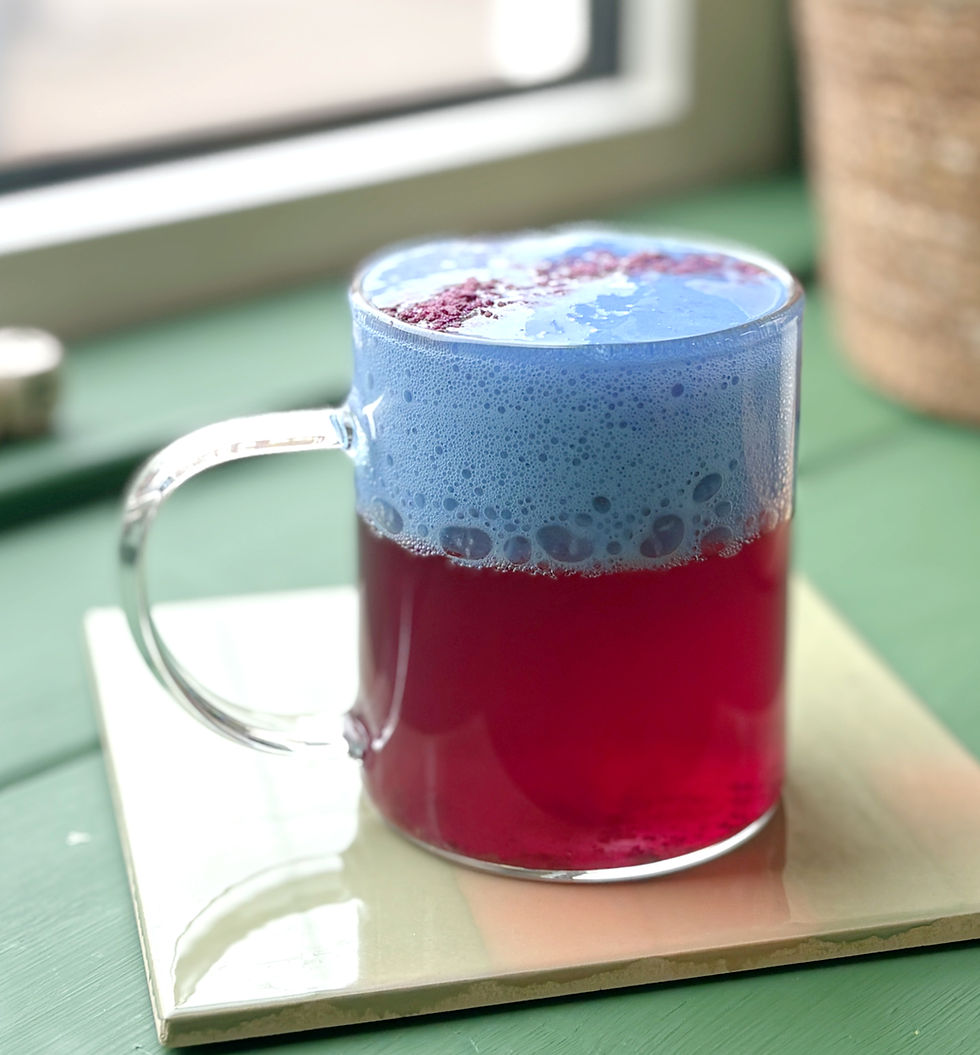
Begin a microdosing protocol integrated with intention, that suits your lifestyle. Pair with adaptogenic tea blends to create supportive rituals.
Session #1 Hypnosis - Getting comfortable with the process of change and adopting a strategy for success with confidence and meaningful emotional drivers.
Phase 2: Managing Stress and Emotional Regulation (Week 2)
As stressful events can be the biggest derailer for consistent changework, we want you to have powerful tools for making different choices.
Rewire your thinking patterns about how you effectively manage stress and emotional upset.
Lean into the community support, tea rituals and neuroplasticity protocols for moving through discomfort and creating new neural pathways.
Notice shifts in awareness, emotional regulation, and cravings.
Session #2 Hypnosis - Creating new habits, mannerisms and beliefs about how you move through difficult moments, allowing your emotional experience to move through you without being reactive.
Phase 3: Who would you rather be? Active Reprogramming (Week 3)
Creating an Identity Shift that feels tangible and real right now, not some day. Stepping into the version of you that is fulfilled without drinking, that loves to practice healthy habits as a way of life, it is WHO you ARE stepping into.
With a new identity to embrace, your thoughts will begin to shift, followed by your emotional states, and then your behaviors.
Build a personalized framework for the version of you that is already thriving and enhance this experience with consistency and repetition.
Use hypnotherapy recordings between sessions to reinforce new patterns
Continue building alternative rituals: herbal tea instead of wine, evening walks instead of happy hour, physical exercise and activities on the weekends, etc.
Session #3 Hypnosis - The Art of Changing your Mind. Learning how to SEE yourself differently, not as in ‘This is the way it is’, but WHO do you want to be.
Phase 4: Integration (Week 4)
Carrying your new sense of self forward. What is possible? What are you here to create? What is the greater meaning you want for your life?
How to continue to create and cultivate habits that are fulfilling rather than consuming?
Developing a long term vision and purpose driven goals for yourself.
Session #4 Hypnosis - Giving your efforts in the program the ‘staying power’ that you will need to take your results even further. Having evidence of your ability to change your mind in highly effective ways. Realizing that your habits are the cause of your overall experience of yourself in life.
What to Expect: Realistic Timeline for Change
Neuroplasticity takes time. Here's what the journey typically looks like:
Weeks 1-2: Increased awareness of patterns, possibly increased discomfort as you notice urges without immediately acting on them
Weeks 3-4: Subtle shifts in cravings, improved mood regulation, moments of genuine ease without alcohol
Weeks 5-8: New patterns starting to feel more natural, reduced emotional dependence on alcohol, better stress management
Months 3-6: Significant transformation in relationship with alcohol, new neural pathways strengthening, old ones weakening
Long-term: Maintenance becomes easier, occasional tune-ups rather than constant effort, sustainable change
Your Brain, Rewired for Freedom
We’re tapping into your brain's natural capacity for change—its neuroplasticity—using tools that meet you where the patterns actually live. And the best part is that everyone can do this!
Hypnotherapy gives you access to your subconscious operating system. Microdosing creates windows of enhanced flexibility. Together, they enable genuine transformation, not just behavior modification.
This is about reclaiming presence, clarity, and choice. It's about discovering that you don't need to numb or escape—that you can be fully here for your life, with all its complexity and beauty.
The pathways are waiting to be rewired. Your brain is ready. The question is: are you?
Ready to begin? Explore our carefully crafted HypnodosingTM program combining hypnotherapy sessions, microdosing protocols, and supportive adaptogenic blends designed specifically for transforming your relationship with alcohol.
With love & care,



I appreciated the hopeful angle here: the brain is not fixed, and changing a drinking pattern is not just about willpower. Neuroplasticity, hypnotherapy, and intentional support can help people interrupt old loops, but I’d still want anyone dealing with opioids to stay very grounded and cautious. With fentanyl dependency, the risks are too serious for guesswork. Medically supervised detox, inpatient treatment, counselling, withdrawal support, relapse prevention, and aftercare can make the difference between a short burst of motivation and real recovery. Rewiring the mind sounds powerful, but having trained people beside you makes that change safer.